

Outdoor Survival Curriculum
Real geography and experiences. Real learning.
For real students and teachers
Downloadable teacher manuals + student workbooks · Grades 6–10
Explore the Curriculum
Choose individual units or combine them into a full course.
Shelters
Build shelters and practice essential knots.
Explore unitFire & Cooking
Practice fire-making and outdoor cooking.
Explore unitFirst Aid
Practice responding to injuries and emergencies.
Explore unitNavigation
Find your way with maps, compasses, and GPS.
Explore unitPioneering
Build structures with poles, ropes, and teamwork.
Explore unitPreparation
Plan ahead and make thoughtful outdoor decisions.
Explore unitEnvironmental Factors
Understand water, weather, temperature, plants, and animals.
Explore unitTools & Cordage
Use knives safely, carve useful objects, and make cordage.
Explore unitChoose your resources
Each available unit can be purchased as a Teacher Manual, an Adventure Journal student workbook, or both together. All resources are downloadable PDFs.
Shop Curriculum →Teaching time & scheduling
Plan approximately 80 hours for the full course: eight units, each with six lessons and a Unit Challenge. Allow about 10 hours per unit. Lessons can be divided across shorter class periods, with time for instruction, outdoor practice, and reflection. Adjust pacing to your class length and meeting frequency.
Why teach Outdoor Survival?
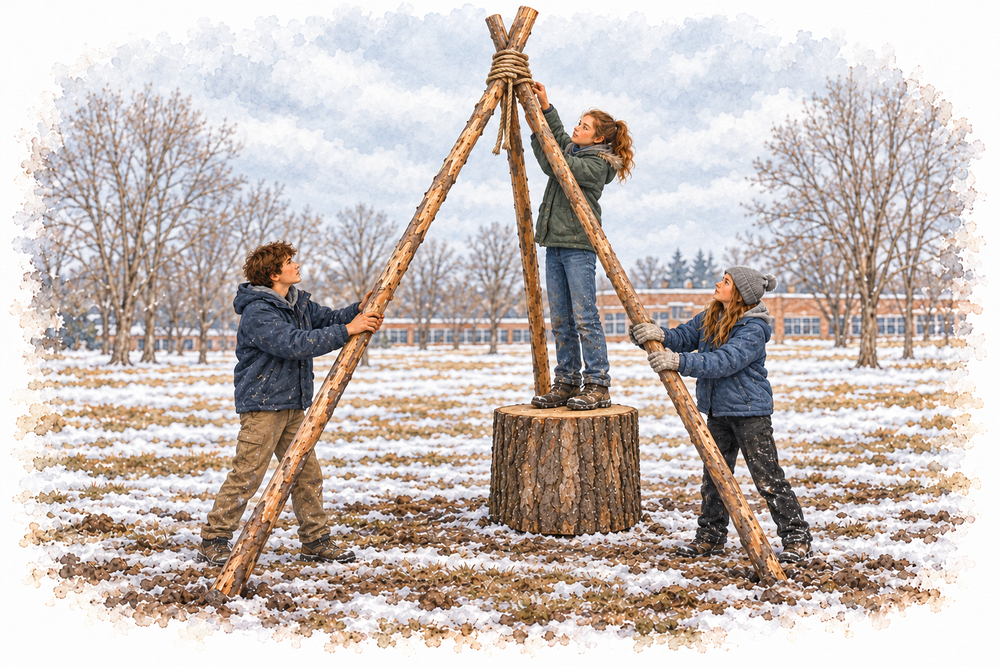 Real Geography
Students learn to understand and engage with the world where they live. Weather, seasons, terrain, plants, and water become part of the lesson as students build shelters, navigate, and prepare for outdoor conditions. Their surroundings shape the problems they encounter and the decisions they make. Learning can begin on school grounds and grow into a deeper understanding of their own place in the world.
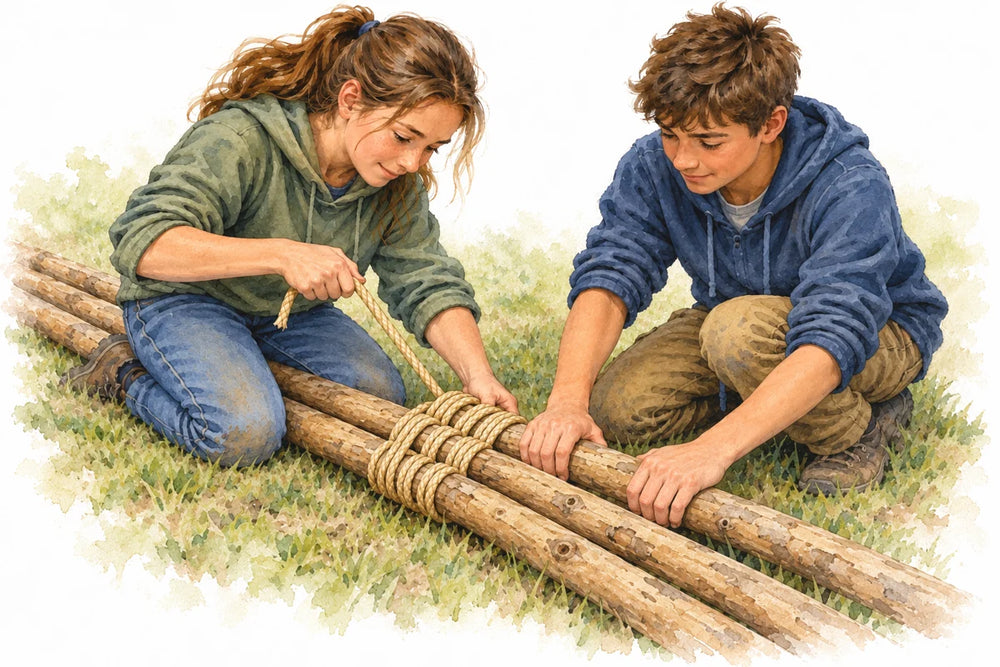 Real Experiences
Students engage in meaningful challenges where their choices and contributions matter. They build something they can use, test whether it works, and make changes based on what happens. Working with real materials and one another brings uncertainty, responsibility, and opportunities to contribute. With a teacher’s guidance, students reflect on their decisions and try again—developing firsthand understanding of the world and their ability to act within it.
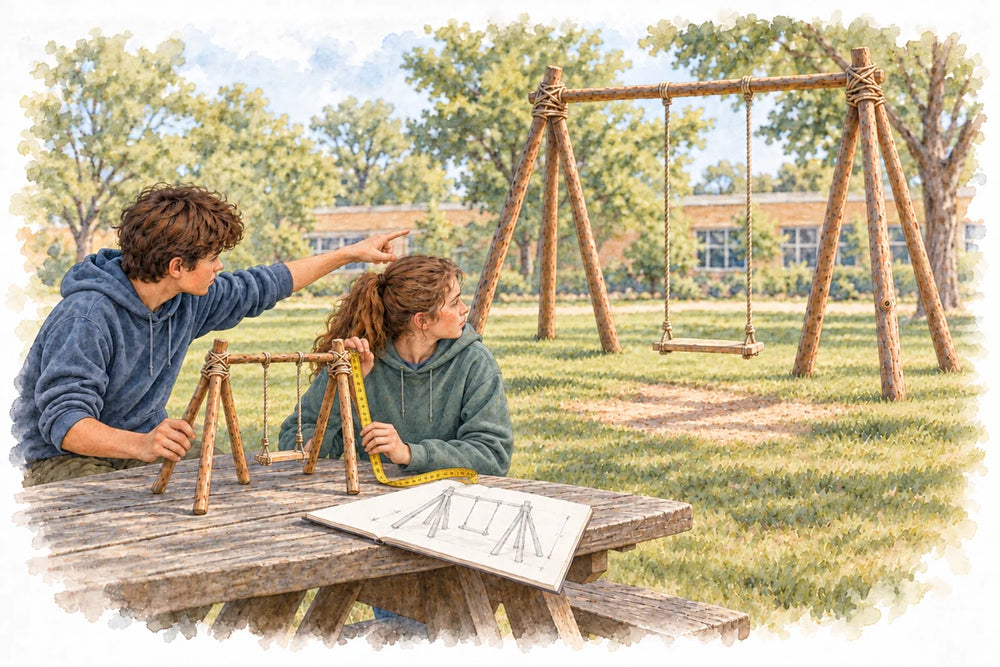 Real Learning
Practical challenges give core subjects a purpose. Students use measurement to build, investigate heat and combustion, interpret maps, and explain their decisions. Alongside this academic learning, they practice managing frustration, listening, sharing responsibility, and working through disagreements. Teacher guidance and reflection help students connect what they do with what they understand—developing practical skills, judgment, confidence, and the ability to work with others.