Outdoor Survival · Applied Wilderness Skills
Tools & Cordage
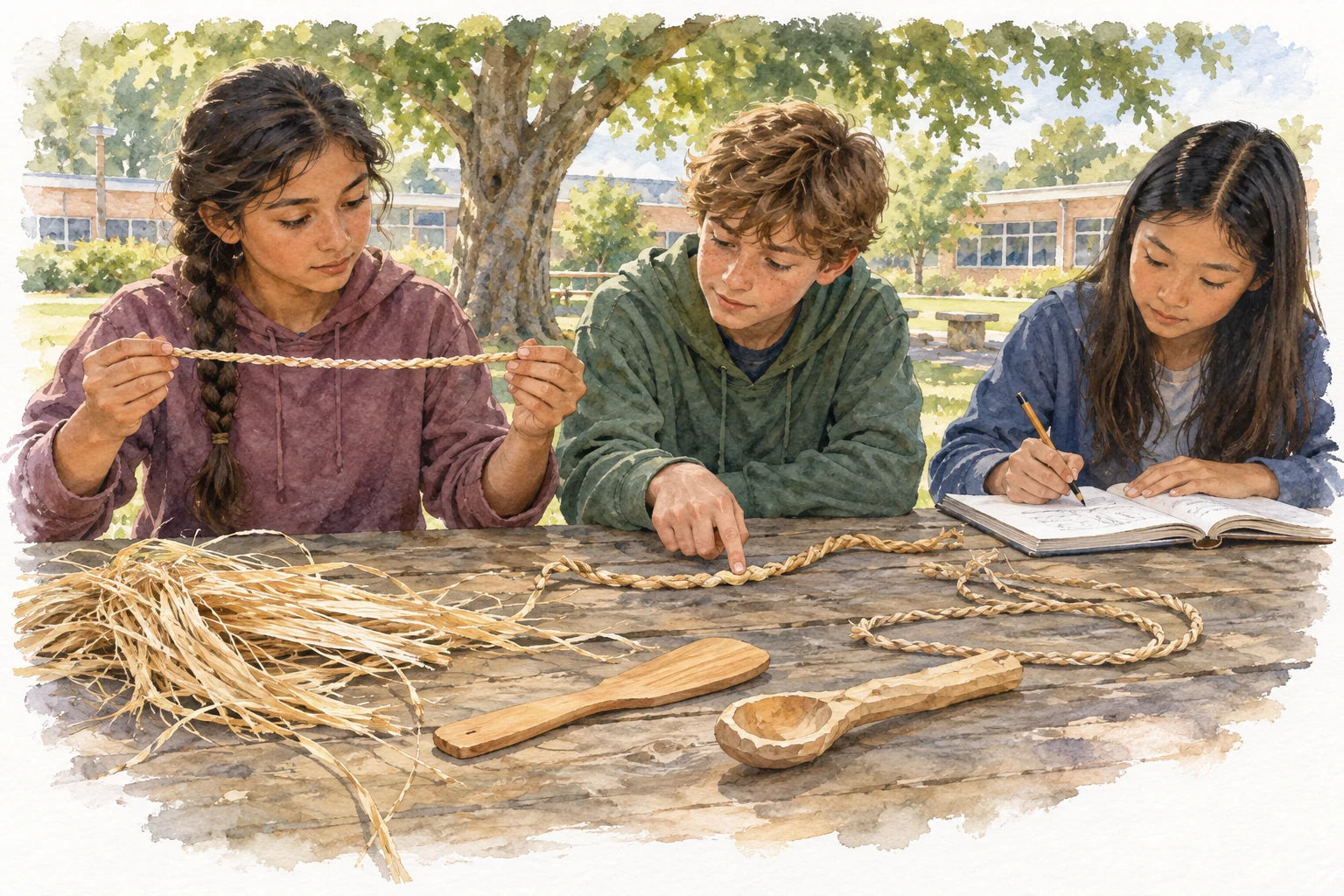
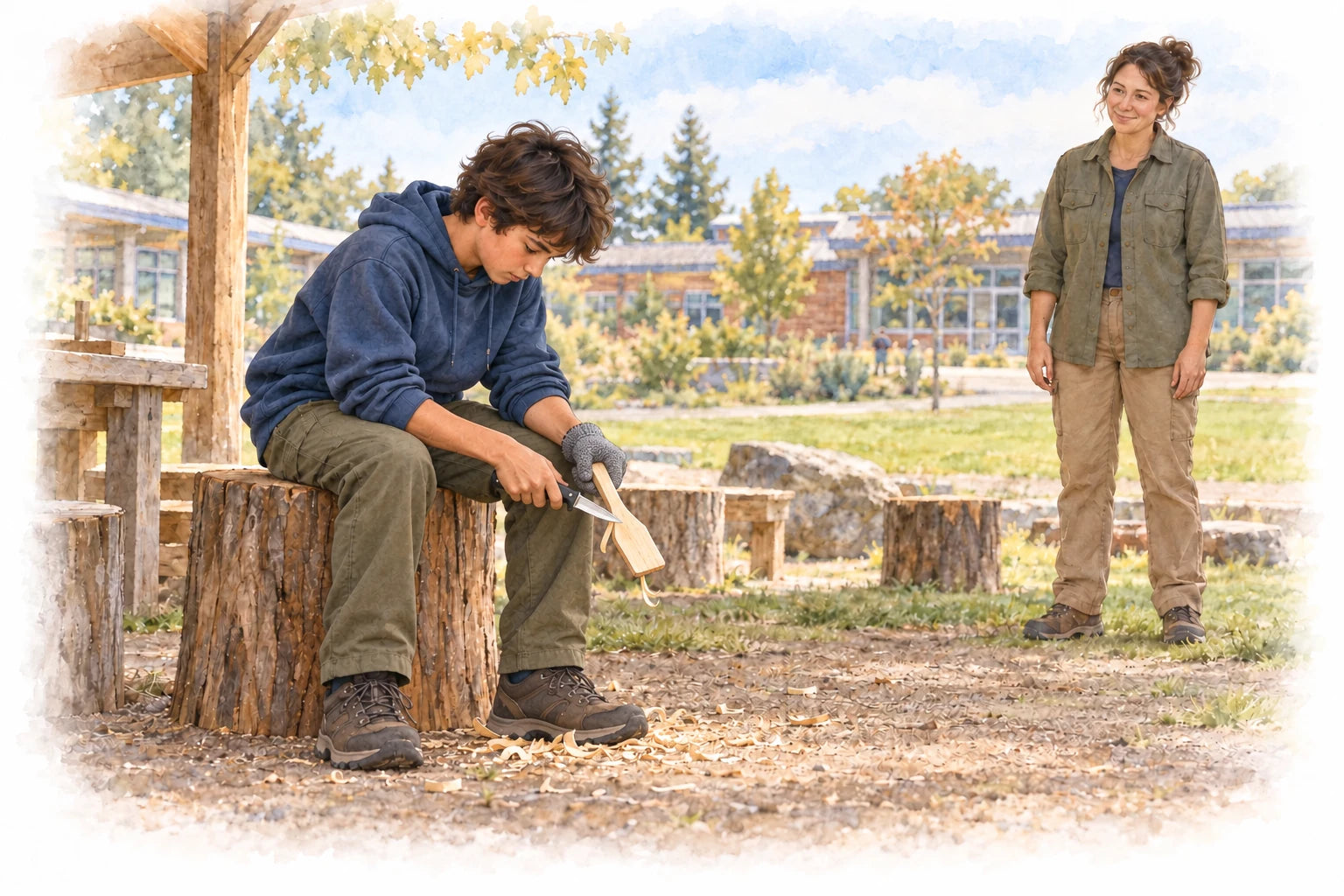
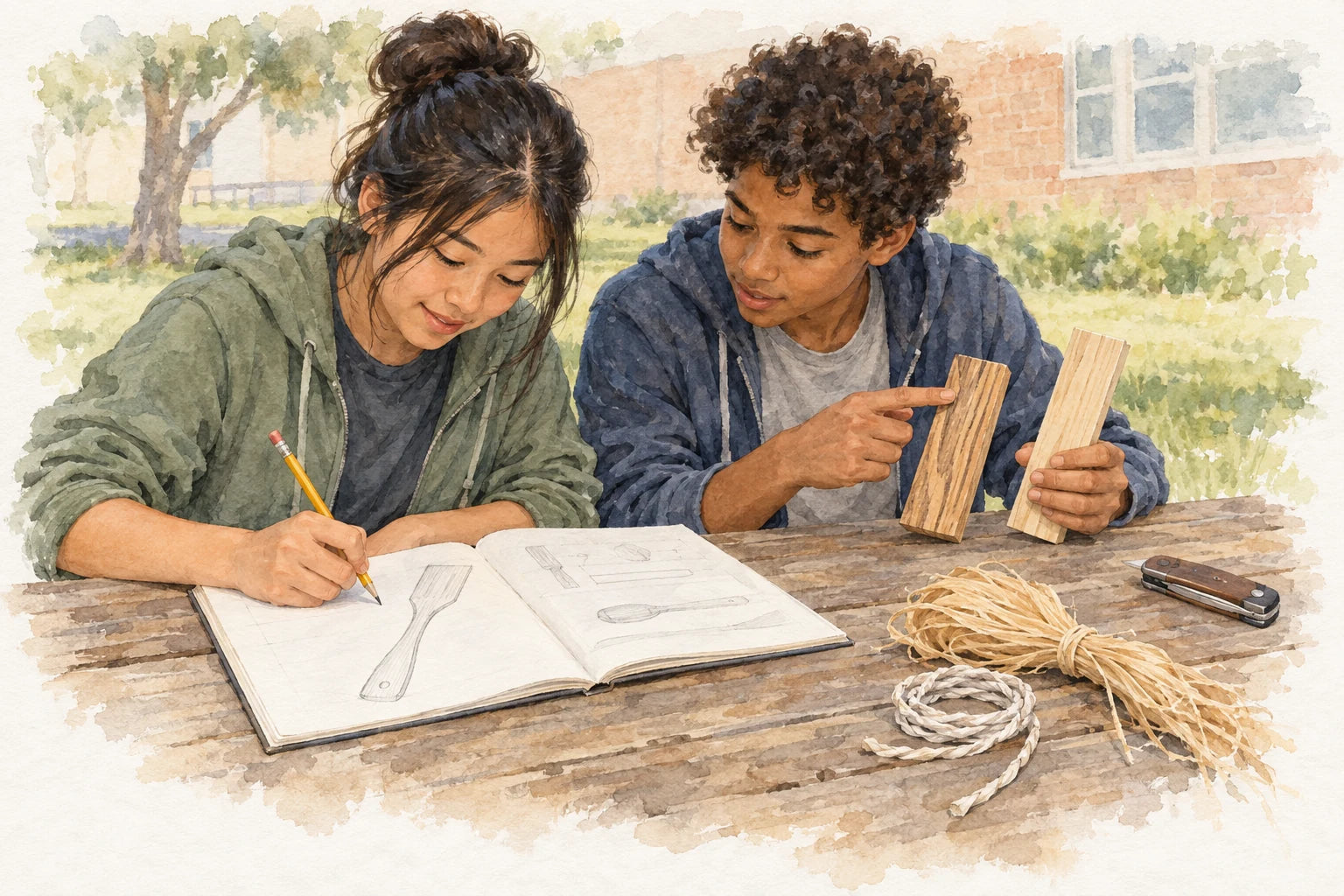
Students make useful wooden objects and handmade cordage while learning to choose materials, control tools and improve their work. Guided carving and fiber-making activities build practical skills, craftsmanship, problem-solving and responsible habits.
For grades 6–10
Inside the Tools & Cordage unit
Students finish by designing, building and evaluating primitive fishing gear that combines a hook, handmade cordage line, spool or reel, and rod. Testing can be simulated; a pond trip is not required.
6 core lessons + Unit Challenge
Read the contents as text
Tools & Cordage — Teacher Manual contents Introduction — 6 Unit Overview — 11 Teacher Background Knowledge — 12 Supplies — 15 Unit Storyline — 17 Lesson 1: Knife Safety — 19 Lesson 2: Carve a Tent Stake — 33 Lesson 3: Carve a Utensil — 44 Lesson 4: Toilet Paper Cordage — 55 Lesson 5: Natural Fiber Cordage — 66 Lesson 6: Try Stick — 76 Unit Challenge: Primitive Fishing Gear — 86 Conclusion — 90
Look inside
Each unit pairs a Teacher Manual with an Adventure Journal student workbook. The manual guides instruction and activities; the journal supports student planning, recording, and reflection.
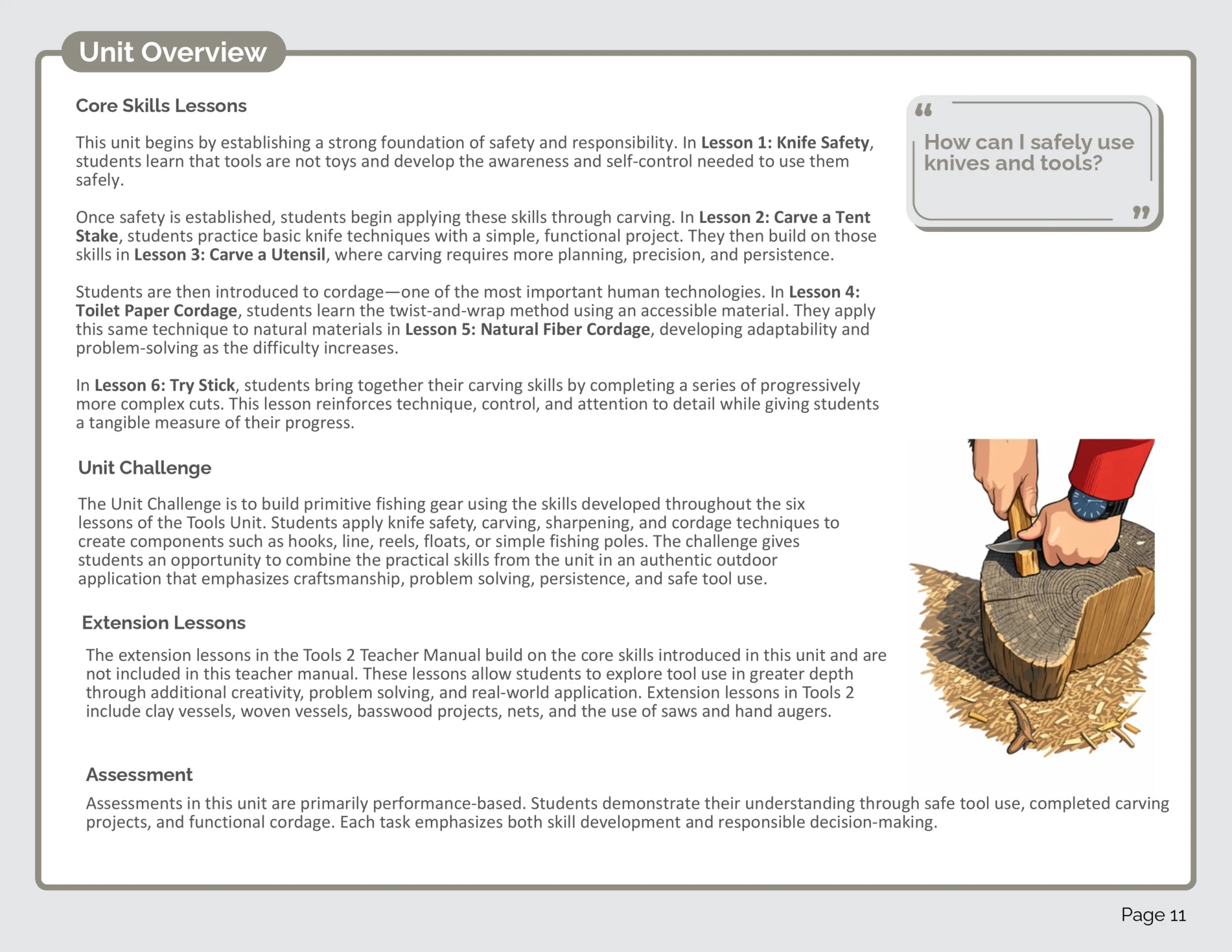
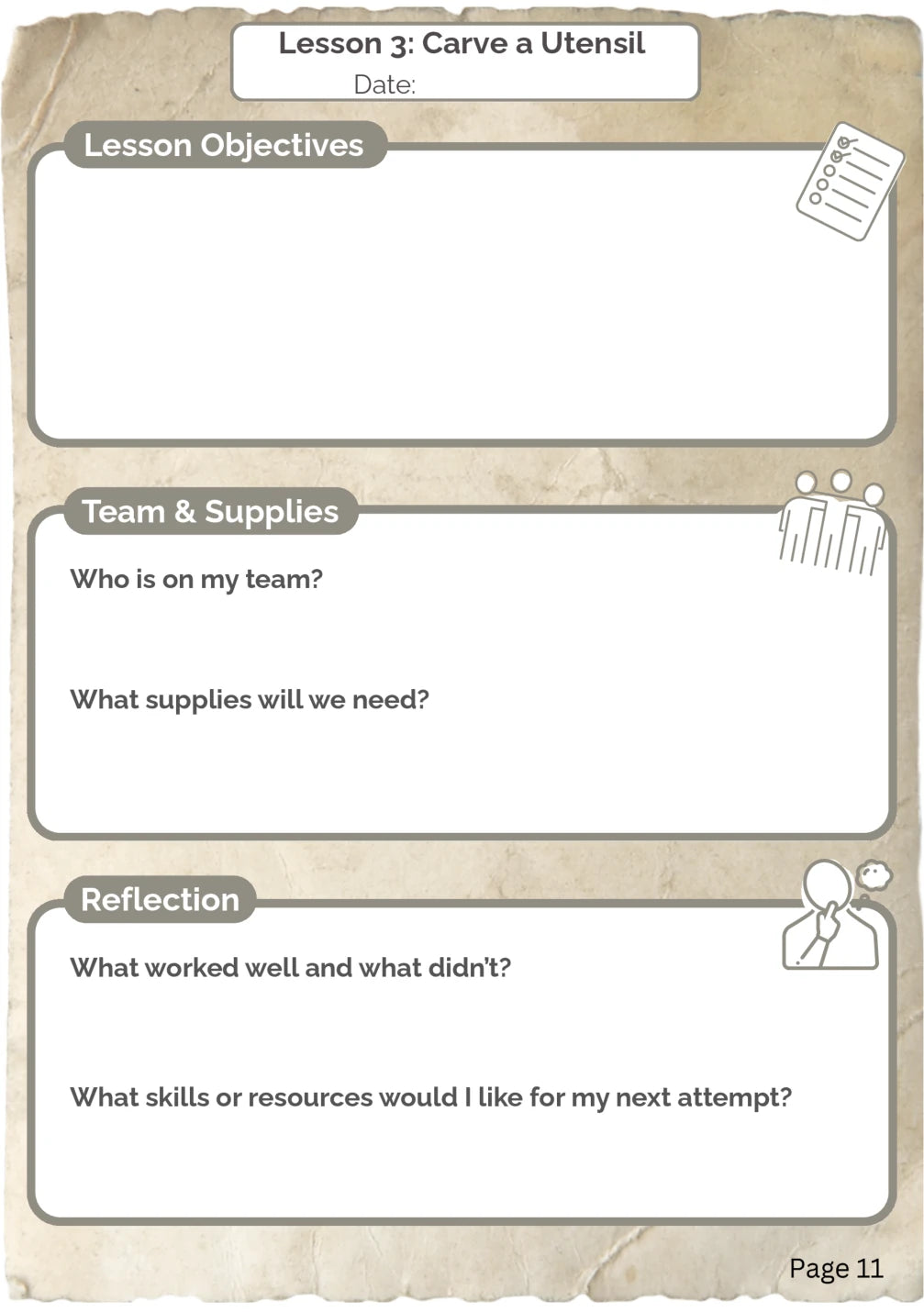
Explore the unit overview and complete Carve a Utensil lesson, with matching student workbook pages for planning, material choices and assessment.
Preview the Teacher Manual
Teacher Manual
See how the lesson is organized, including teaching guidance, materials, safety considerations, and activity instructions.
Preview the Adventure Journal student workbook
Adventure Journal student workbook
See the matching pages students use to plan their utensil, compare wood choices and assess their work.
Teacher Manual + Student Workbook
Downloadable PDFs: the Teacher Manual and matching Adventure Journal student workbook for this unit. Printed books and supplies are not included.
Individual resources
Each bundle includes both resources for one unit. Shop other units →
Teaching this unit
Provide an outdoor workspace with stable seating and clear knife-safety zones. Prepare carving wood, locking-blade knives, sharpening stones and cordage materials; confirm tool permissions, teach safe handling and actively supervise practice.
Supplies & teaching preparation
Equipment
Plan for nonserrated locking-blade knives, sharpening stones and suitable lubricant, carving sticks or wood blanks, cut-resistant gloves, and a first-aid kit. Utensil projects use sandpaper and optional food-grade finishing oil or wax. Cordage lessons use toilet paper or paper towels, scissors, finishing tape, rope/paracord for coiling, and prepared natural fibers; the manual recommends natural raffia as a practical purchased option. The challenge adds materials for hooks, handmade fishing line, a spool/reel and rod. Use the actual supplies PDF and each lesson's list before purchasing.
Workspace
Use a designated outdoor area with stable seating or working surfaces, clear boundaries, good sightlines and enough room for each student's arm-and-blade safety zone. Provide surfaces for sharpening and journal work, and a system for storing tools and unfinished projects. Natural fibers may be supplied rather than gathered locally.
Preparation
Review the teacher background and safety lessons; practice knife opening/closing, sharpening, controlled carving, reverse wrapping and splicing before teaching. Confirm school or program permission for knives and obtain the signed parent permission forms required by the manual. Inspect locks, blades, wood and fiber materials. Prepare an assigned tool-distribution and collection system.
Open complete Knife Safety prerequisite PDF ↗
Supervision
Teach and check safe handling before carving. Maintain clear working zones, direct cuts away from bodies and fingers, close folding knives before moving, and count tools back into storage before dismissal. Actively supervise and pause unsafe or distracted work. Keep projects focused on useful objects. During cordage practice, prevent whipping or wrapping cord around body parts; inspect and gently test samples on the work surface. Supervise natural-fiber preparation and any sharp challenge components. Keep cordage away from necks.
Pacing
Plan approximately 10 hours across the unit, with additional time as needed for carving and testing. For shorter periods, separate safety instruction and planning from guided practice, evaluation and cleanup. Store unfinished projects between sessions. Longer carving projects and the Unit Challenge may require additional sessions.
Delivery, printing & licensing
Delivery
After purchase, download links are emailed to the checkout address. The products are PDFs; printed books and activity supplies are not included.
Printing and use
A single-teacher license covers printing student materials for that teacher's own students and classes, and printing the manual for instructional use. Each additional instructor needs a license. Permission is required to distribute the files or post them online or in school/district repositories.
Digital downloads & printing details →
Pilot Edition
The currently offered unit includes six core lessons and a Unit Challenge. Pilot Edition identifies its development stage as it is refined through classroom use. Tools 2 extensions are not included.
School & group purchasing
Contact Pathfinder Learning with your school or program name, the units you want, the number of instructors, your reply email and any purchasing requirements.
Ask about school purchasing →